Liquid-Cooled Cold Plate
Cooling system design, developed for Schaeffler Group
About Project
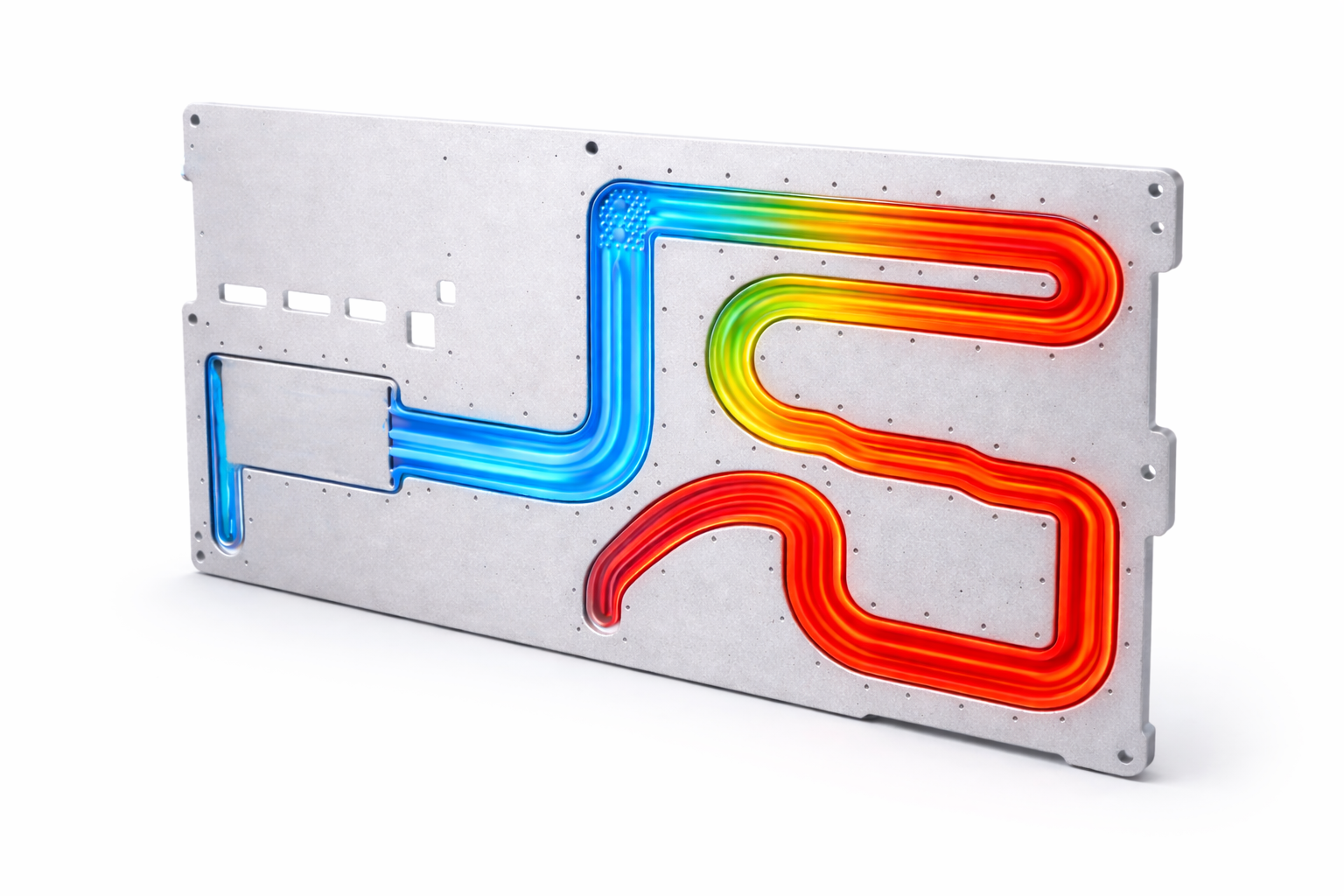
The cold plate was designed as the primary thermal management solution for the 4-in-1 converter to dissipate heat generated by the power modules, SiC switches, and magnetic components. The design integrates cooling channels within an aluminum structure.
Objectives: Maintain safe operating temperatures; minimize pressure drop; reduce flow maldistribution; ensure manufacturability and ease of assembly.
Challenges: Ensuring leak-free operation; cooling multiple components with different heat dissipation levels; prevent excessive pressure losses.
Cold Plate Overview
Challange 1: Ensuring leak-free operation
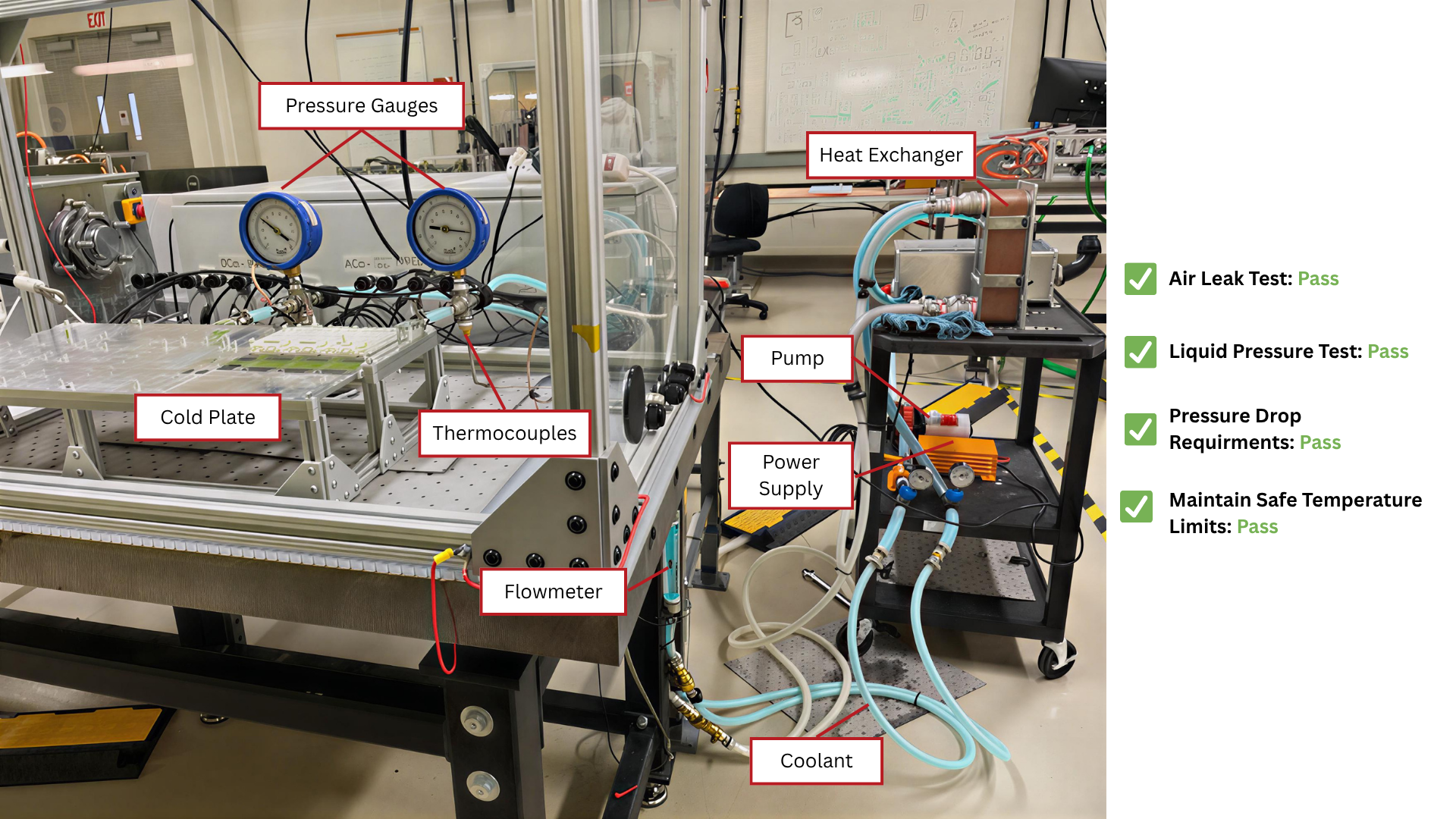
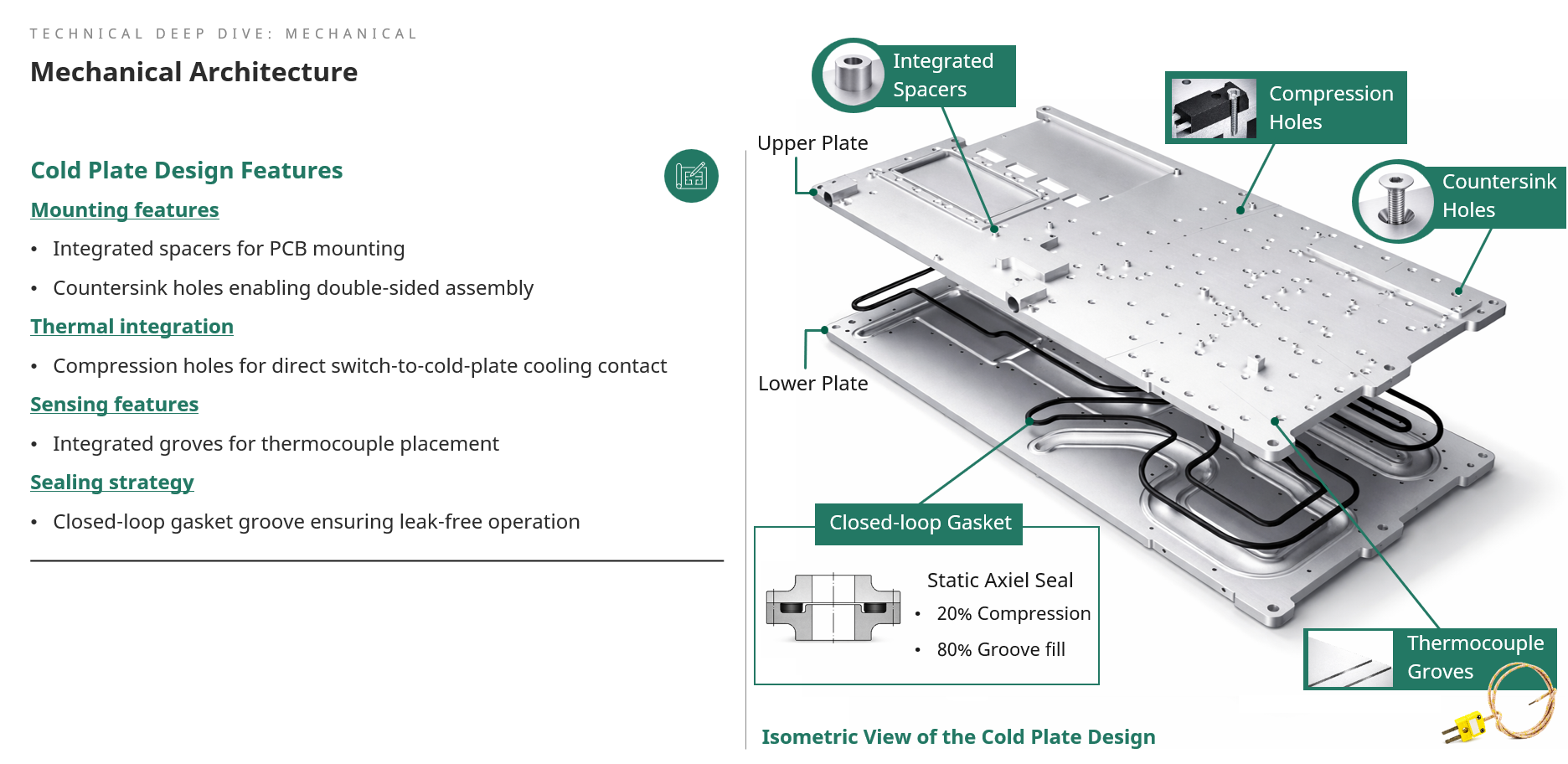
Solution: To ensure leak-free operation, a closed-loop gasket was implemented following static axial sealing design guidelines. Proper gasket compression and groove design were considered to achieve reliable sealing performance. The cold plate was successfully validated through both air leak testing and liquid pressure testing
Challange 2: Cooling multiple components with different heat dissipation levels
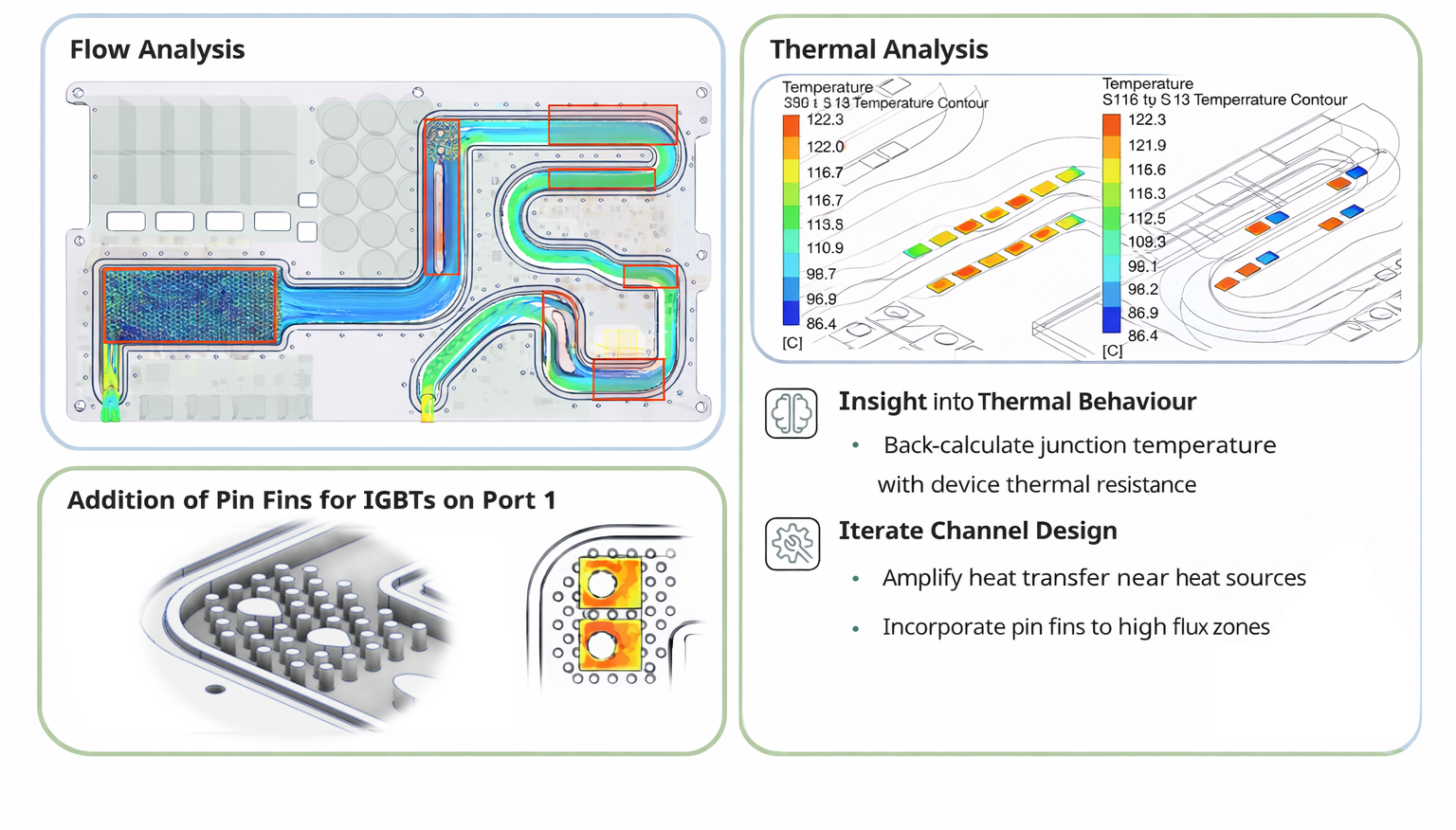
Solution: This challenge was addressed by optimizing the cooling channel geometry to control coolant flow distribution according to the thermal load of each component. Channel widths were adjusted to direct higher flow rates toward high heat flux regions. Additionally, pin fins were integrated in critical areas to enhance turbulence and increase the local heat transfer coefficient, enabling more effective heat removal from components with higher power dissipation.
Challange 3: Prevent excessive pressure losses
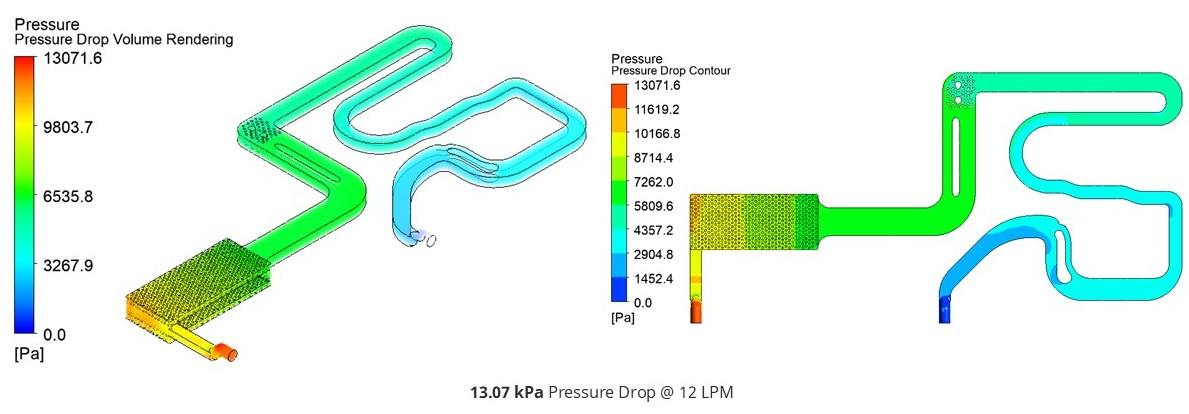
Solution:To prevent excessive pressure losses, sharp corners were avoided in the cooling channel design to reduce flow separation and hydraulic resistance. Design iterations based on CFD simulations were performed to eliminate flow recirculation and vortices, resulting in improved flow distribution and reduced pressure drop while maintaining effective thermal performance.
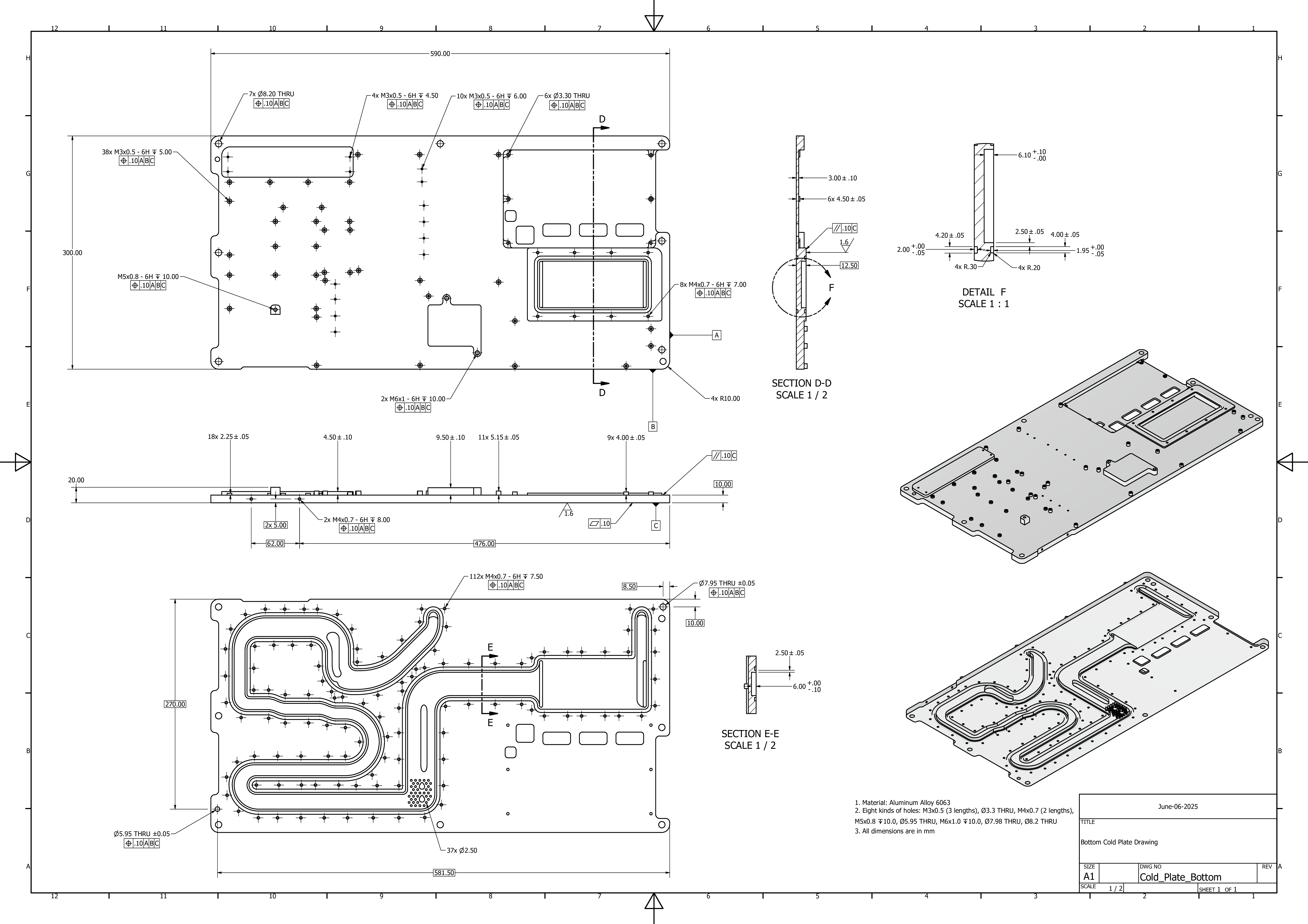
Isometric View of the Cold Plate Design
Technical Drawings
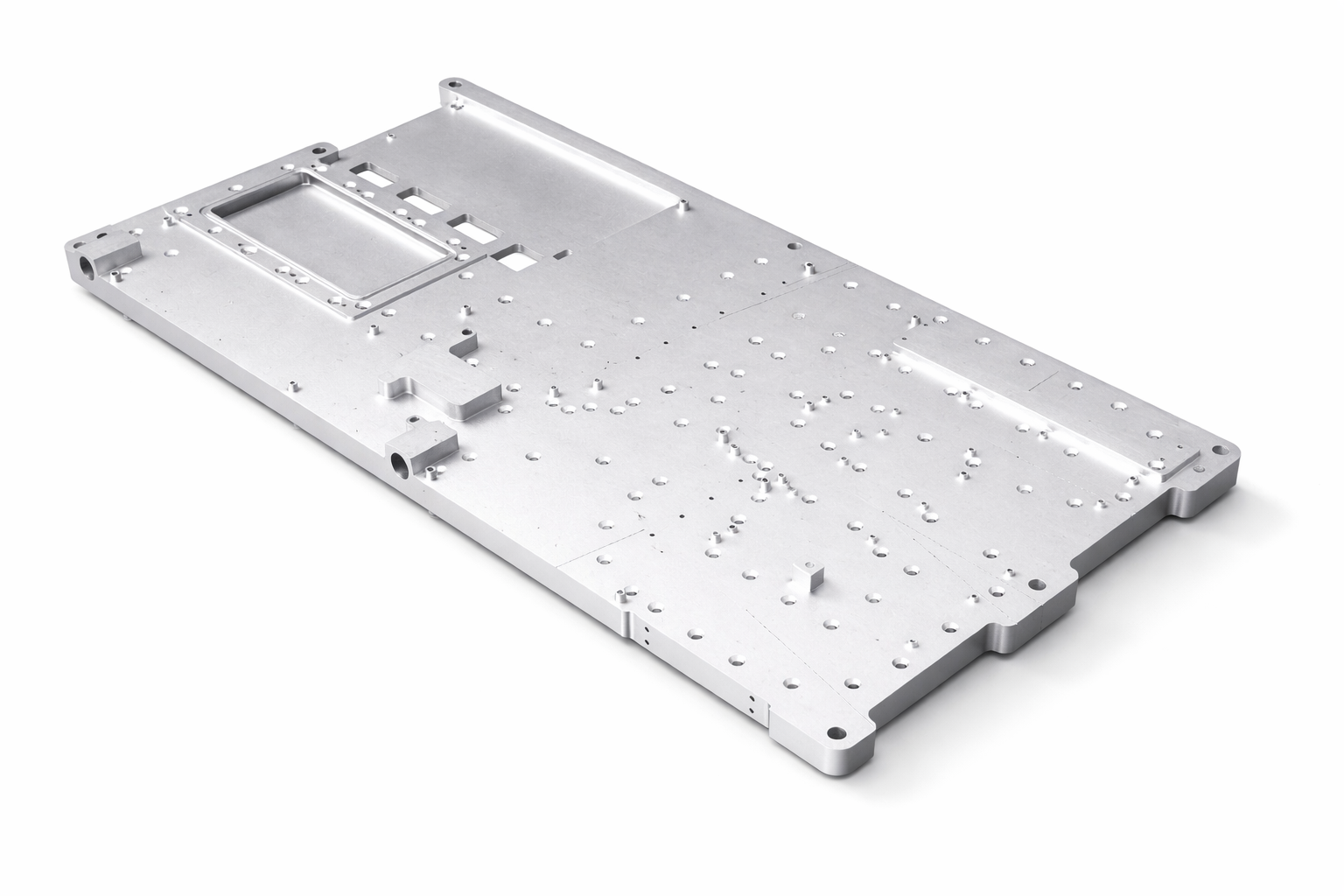
Manufactured design
.png)
Testing